


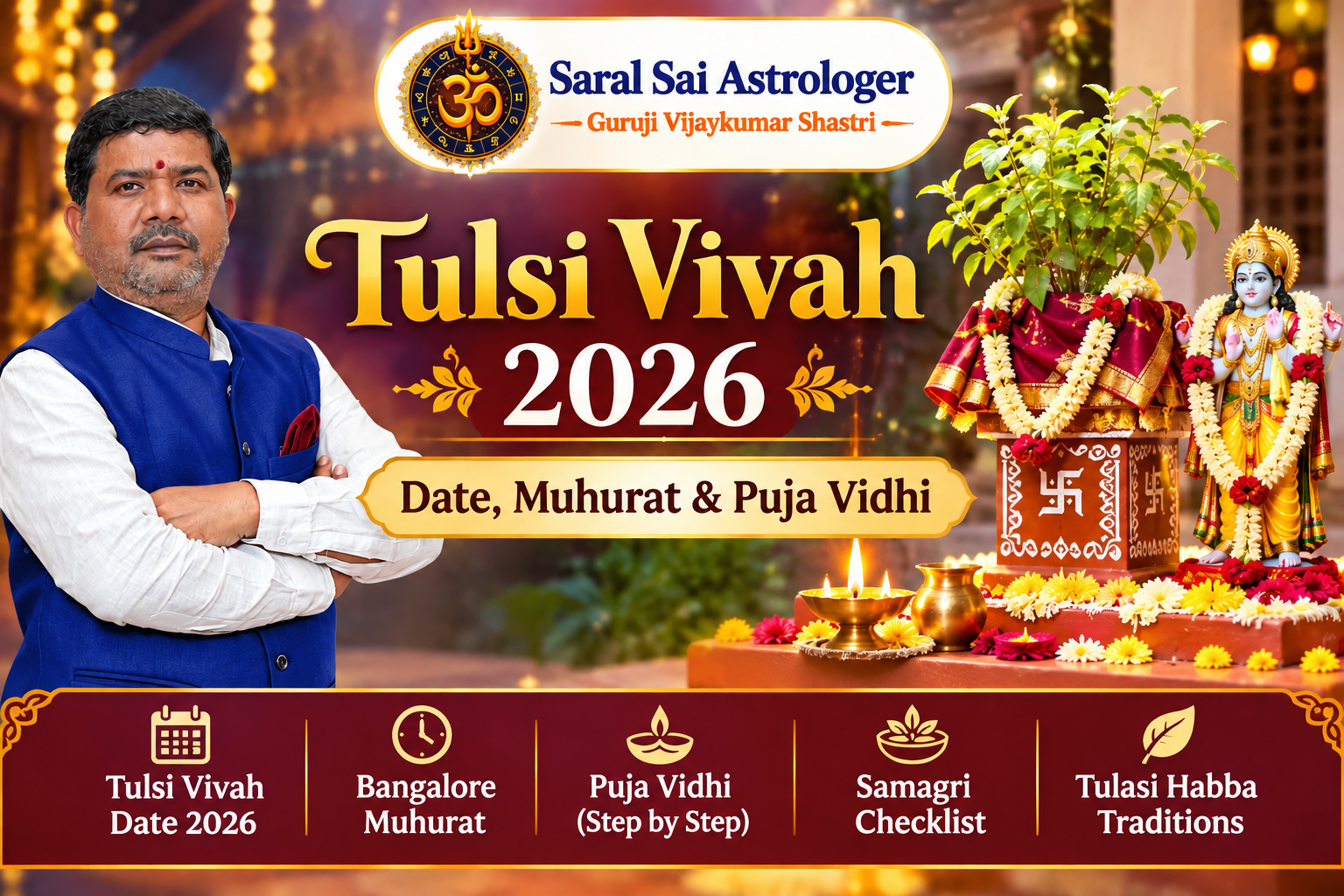
Tulsi Vivah 2026 will be celebrated on Saturday, 21 November 2026, according to the Bengaluru Panchang. In Karnataka, many Kannada-speaking families also know this festival as Tulasi Habba (ತುಳಸಿ ಹಬ್ಬ). It marks the traditional wedding of Goddess Tulsi with Lord Vishnu and is observed during Kartik Shukla Dwadashi. Families celebrate by decorating the Tulasi plant, performing pooje and seeking blessings for happiness and harmony at home.
Key Takeaways
- Tulsi Vivah Date 2026: Saturday, 21 November.
- Kannada Name: Tulasi Habba (ತುಳಸಿ ಹಬ್ಬ).
- Bengaluru Pradosh Muhurat: 5:50 PM to 8:20 PM.
- Tithi: Kartik Shukla Dwadashi.
- Dev Uthani Ekadashi: 20 November 2026.
- Main Ritual: Symbolic marriage of Tulasi Mata and Lord Vishnu.
- Preferred Puja Time: Evening Pradosh period.
When Is Tulsi Vivah 2026?
Tulsi Vivah 2026 falls on Saturday, 21 November, corresponding to Kartik Shukla Dwadashi in the Bengaluru Panchang.
In Karnataka, the festival is commonly referred to as Tulasi Habba. Families who maintain a Tulasi katte (ತುಳಸಿ ಕಟ್ಟೆ), the traditional platform built around the Tulasi plant, may celebrate the occasion by decorating it with flowers, lighting a deepa and performing special pooje.
According to the Bengaluru Panchang, Dwadashi Tithi begins at approximately 6:32 AM on 21 November and ends at 4:57 AM on 22 November.
However, Tulsi Vivah is not celebrated on exactly the same day in every region. Some North Indian and Vaishnava families perform the ceremony on Ekadashi, while many others follow Dwadashi. Certain communities also observe the wedding on another auspicious day before Kartik Purnima.
If your family follows a particular temple or regional tradition, use its Panchang when deciding the puja date.
What Is the Tulsi Vivah Muhurat 2026 in Bangalore?
The Bengaluru Pradosh period for Tulsi Vivah is 5:50 PM to 8:20 PM on Saturday, 21 November 2026.
Pradosh Kaal begins around sunset and is traditionally preferred for the symbolic wedding of Tulasi Mata and Lord Vishnu. Families can use this evening period to perform their customary rituals.
| Panchang Detail | Timing |
|---|---|
| Festival Date | 21 November 2026 |
| Day | Saturday |
| Dwadashi Begins | 6:32 AM, 21 November |
| Dwadashi Ends | 4:57 AM, 22 November |
| Bengaluru Pradosh Period | 5:50 PM – 8:20 PM |
Timings can differ between Bengaluru, Mysuru, Mangaluru, Hubballi and other Karnataka cities because local sunset times vary. The above window is specifically for Bengaluru. It is the broader Pradosh period, not a guarantee that every minute within it is an independently calculated auspicious muhurat.
Why Do We Celebrate Tulasi Habba?
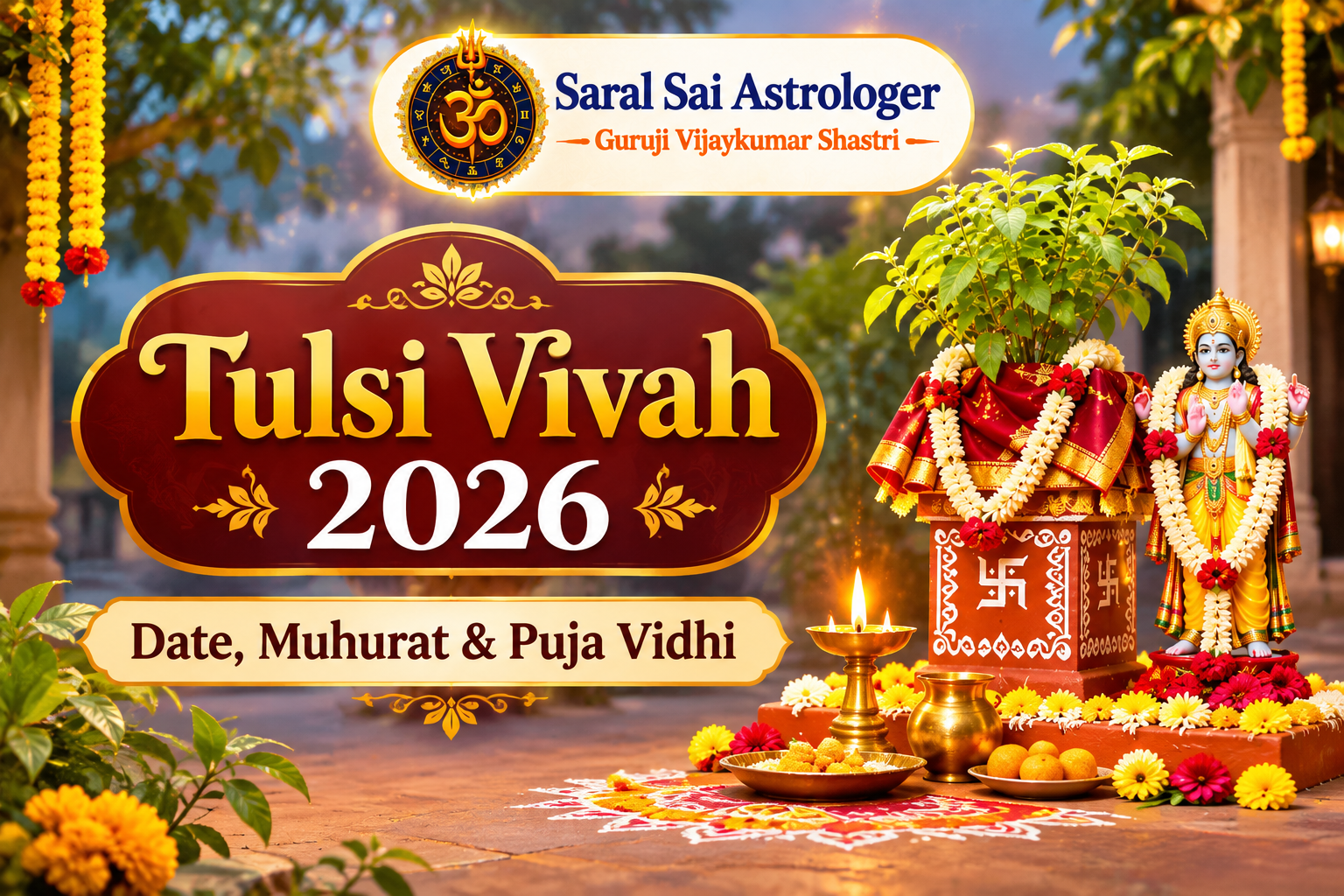
Tulsi Vivah celebrates the sacred marriage of Goddess Tulsi and Lord Vishnu. In Hindu tradition, Tulsi is associated with purity and devotion, while Lord Vishnu represents the preservation and protection of the universe.
The festival is also connected with the story of Vrinda, whose devotion is remembered in Hindu religious traditions.
For many Kannada-speaking households, Tulasi Habba is a special occasion to clean and decorate the Tulasi katte, offer hoovu (flowers), light a deepa and perform pooje with family members.
The ceremony is traditionally associated with:
- Devotion to Goddess Tulsi and Lord Vishnu.
- Prayers for marital harmony and family well-being.
- The traditional beginning of the Hindu wedding season.
- Maintaining religious customs across generations.
How to Perform Tulsi Vivah Pooje at Home?
You don’t need an elaborate mandap or expensive decorations to celebrate Tulasi Habba. A clean Tulasi katte, traditional offerings and a simple marriage ceremony are enough for many families.
Here is a commonly followed Tulsi Vivah Puja Vidhi:
- Clean the Tulasi katte: Clean the area around the Tulasi gida (plant). Draw a small rangoli, known locally as rangoli or muggulu, around the platform.
- Decorate Tulasi Mata: Decorate the plant with hoovu (flowers), a garland and a small saree or wedding cloth.
- Prepare Lord Vishnu: Place a Shaligram Shila or an idol or picture of Lord Vishnu beside the Tulasi plant.
- Begin with Ganesh Pooje: Worship Lord Ganesha before starting the marriage ceremony.
- Offer Arishina and Kumkuma: Apply turmeric (arishina) and kumkum (kumkuma) as part of the traditional worship. Offer fresh flowers.
- Perform the symbolic marriage: Conduct the wedding ritual using cotton thread or cloth. Some families also perform Kanyadaan according to their customs.
- Offer Hannu and Naivedya: Present fruits (hannu), coconut, sweets and betel leaves as offerings.
- Perform Aarti: Complete the ceremony with Tulsi Aarti and Vishnu Aarti. Distribute prasada among family members.
The exact rituals may differ between Karnataka families and other regions. Follow the practices traditionally observed in your household.
What Items Are Required for Tulsi Vivah?
Before starting the pooje, arrange the Tulsi Vivah samagri so everything is ready.
Tulsi Vivah Samagri Checklist
- Tulasi gida (Tulsi plant) and Tulasi katte.
- Shaligram Shila or Lord Vishnu idol.
- Arishina (turmeric) and Kumkuma.
- Hoovu (fresh flowers) and garlands.
- Hannu (fruits) and traditional sweets.
- Deepa, ghee and agarbatti.
- Cotton thread.
- Sugarcane.
- Tenginakayi (coconut).
- Betel leaves and adike (betel nuts).
- Wedding cloth or saree for Tulasi Mata.
- Rangoli powder and traditional decorations.
- Puja plate and bell.
Some families also prepare additional offerings according to their regional customs. You can follow your family’s traditional samagri list rather than arranging every item mentioned in other regional guides.
What Is the Astrological Significance of Tulsi Vivah?
Tulsi Vivah is associated with devotion, marriage and family harmony in Hindu religious traditions. Many devotees consider the occasion suitable for praying for a peaceful family life and a happy married life.
In Vedic astrology, marriage compatibility is traditionally assessed by examining the seventh house, Venus, Jupiter and the birth charts of prospective partners.
These planetary associations form part of traditional astrological interpretations. However, performing Tulsi Vivah should not be treated as a guaranteed remedy for delayed marriage, relationship difficulties or financial problems.
If you want to understand your marriage horoscope or relationship compatibility, you can explore the Vedic astrology consultation services offered by Saral Sai Astrologer in Bangalore.
What Should You Avoid During Tulsi Vivah Pooje?
A simple ceremony performed with devotion is more important than elaborate arrangements.
Keep these traditional practices in mind:
- Avoid damaging the Tulasi gida while decorating it.
- Clean the Tulasi katte before starting the pooje.
- Arrange the flowers, deepa and other offerings beforehand.
- Follow your family’s customs regarding Tulsi leaves and plant handling.
- Avoid assuming that the ceremony automatically resolves marriage or financial difficulties.
- Confirm the puja timing with your local Panchang or family priest.
Frequently Asked Questions About Tulsi Vivah 2026
When is Tulsi Vivah in 2026?
Tulsi Vivah 2026 will be observed on Saturday, 21 November, according to the Bengaluru Dwadashi observance. Some families follow the Ekadashi tradition and perform the ceremony on 20 November.
What is the Tulsi Vivah Muhurat in Bangalore?
The Bengaluru Pradosh period is 5:50 PM to 8:20 PM on 21 November 2026. Families traditionally perform the symbolic wedding during the evening period.
What is Tulasi Habba called in Kannada?
Tulasi Habba (ತುಳಸಿ ಹಬ್ಬ) is the Kannada name commonly used for the Tulsi festival. It is an occasion when families worship the Tulasi plant and perform traditional rituals at the Tulasi katte.
Can we celebrate Tulasi Habba at home?
Yes. Families can celebrate Tulasi Habba at home by cleaning and decorating the Tulasi katte, offering flowers, performing pooje and conducting the symbolic marriage with Lord Vishnu or Shaligram.
What is the difference between Dev Uthani Ekadashi and Tulsi Vivah?
Dev Uthani Ekadashi marks the traditional awakening of Lord Vishnu after Chaturmas. Tulsi Vivah celebrates the symbolic marriage of Goddess Tulsi and Lord Vishnu. Depending on family and regional customs, the wedding may take place on Ekadashi or Dwadashi.
Celebrate Tulasi Habba with Saral Sai Astrologer in Bangalore
Tulasi Habba is a beautiful part of Karnataka’s religious traditions. For many families, decorating the Tulasi katte, lighting a deepa and performing the evening pooje are meaningful ways to celebrate the occasion together.
If you are looking for guidance on marriage compatibility, relationship concerns or horoscope analysis, Saral Sai Astrologer, under the guidance of Guruji Vijaykumar Shastri, offers traditional Vedic astrology consultations in Bangalore.
Explore the available astrology consultation services or learn more about horoscope analysis for personalised guidance based on your birth details.
May Goddess Tulasi and Lord Vishnu bless your family with peace, happiness and harmony.
